There are dozens of details to take care of in the day-to-day operation of your department and your company. We give you case studies, news updates, best practices and training tips that keep your organization fully in compliance with ever-changing employment law, and you fully aware of emerging HR trends.
The U.S. 8th Circuit Court of Appeals—which covers Arkansas, Iowa, Minnesota, Missouri, Nebraska, North Dakota, and South Dakota—recently reversed an Arkansas district court’s dismissal of a former employee’s retaliation claim against a grain company under Title VII of the Civil Rights Act of 1964, the Equal Pay Act (EPA), and the Arkansas Civil Rights Act.
“Peter,” a senior information technology (IT) director of a retail order fulfillment company, was terminated when his position was eliminated in an IT department restructuring. Was the CEO’s statement that the company wanted a “new face” enough for Peter to establish direct evidence of age discrimination?
Everywhere employers turn, there’s another retaliation claim being made against them under Title VII of the Civil Rights Act of 1964, the Family and Medical Leave Act (FMLA), or another state or federal statute. Here’s yet another one.
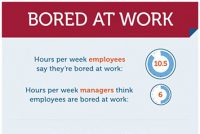
A new survey indicates that office workers are bored at work an average of 10.5 hours per week, or about 68 days per year. That eye-opening finding comes from OfficeTeam, who took a look at the level of workplace boredom and its implications. One such implication that isn’t likely to evoke a ‘ho hum’: 2 […]
Pay equity, parental leave, and criminal history are hot topics that have been grabbing attention for some time, and employers in California now need to prepare for three newly signed laws addressing those issues.
Faced with a rapid increase in the number of caregivers in the workplace, Northeast Business Group on Health (NEBGH) and AARP have launched Supporting Caregivers in the Workplace: A Practical Guide for Employers.
A significant number of workplace managers believe that members of “Generation Z” –those whose birth years range from the mid-1990s to mid-2000s, and a number of whom are or will soon be entering the workforce—will be more difficult to work with, according to new survey.
Closing the skills gap is an ongoing challenge for employers, and a recent survey found that the gap is widening in some organizations.
Over the spring and summer, the Equal Employment Opportunity Commission (EEOC) was busy cracking down on employers for various pay and disability discrimination violations, in Maryland and California.
Background checks for job candidates are commonplace in the United States. Most employers search beyond resumes and interviews for information about a potential new hire. Most job seekers expect employers to dig a bit into their backgrounds.