Category: HR Management & Compliance
There are dozens of details to take care of in the day-to-day operation of your department and your company. We give you case studies, news updates, best practices and training tips that keep your organization fully in compliance with ever-changing employment law, and you fully aware of emerging HR trends.
Can you force an employee who is on intermittent FMLA to take a set period of leave? The intermittent leave is too disruptive due to the fact that the employee’s absences are more often than expressed in the medical certification.
By Martin J. Regimbal, The Kullman Firm Be careful if you take an adverse action against an employee who is using or has recently used FMLA leave. Claims of retaliation based on an employee’s protected leave are common under the FMLA. You must use the same care when you terminate someone who has exercised his […]
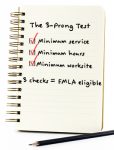
This article series highlights the requirements for determining Family and Medical Leave Act (FMLA) eligibility. The last installment focused on the first area of the three-prong test used to determine FMLA eligibility, the minimum service requirement.
In Yesterday’s Advisor, we began to learn about employer responsibility when it comes to joint employment. Today, we’ll explore the responsibilities of the secondary employer.
By Susan Schoenfeld, JD In February 2016, the U.S. Department of Labor (DOL) published its notice of proposed rulemaking (NPRM) to implement Executive Order (EO) 13706, Establishing Paid Sick Leave for Federal Contractors. EO 13706 requires parties that enter into covered contracts with the federal government to provide covered employees with up to 7 days […]
In early 2016, the Wage and Hour Division of the U.S. Department of Labor (DOL) released an Administrator’s Interpretation addressing joint employment under the Fair Labor Standards Act (FLSA) and Migrant and Seasonal Agricultural Worker Protection Act (MSPA). In conjunction with this release, the DOL also issued a new fact sheet on the Family and […]
By Jodi R. Bohr, Gallagher & Kennedy, P.A. Needing workers to assist with the business is an almost certain eventuality as a company grows. The first and probably most important question an employer asks itself is whether the worker should be classified as an employee or an independent contractor.
Supervisors who ask employees to perform work during unpaid meal periods could be putting their employer at risk for a wage and hour lawsuit. However, training can help educate supervisors about federal and state law regarding the compensability of meal periods and, in the process, minimize the risk of such lawsuits.
When we require employees at our branch to travel to the main office for an after hour meeting—for which they will be paid—are we required to pay mileage as well?
By Jean Serio Building online talent community for recruiting strategy success